Coffee origin: El Paraíso
Origin history
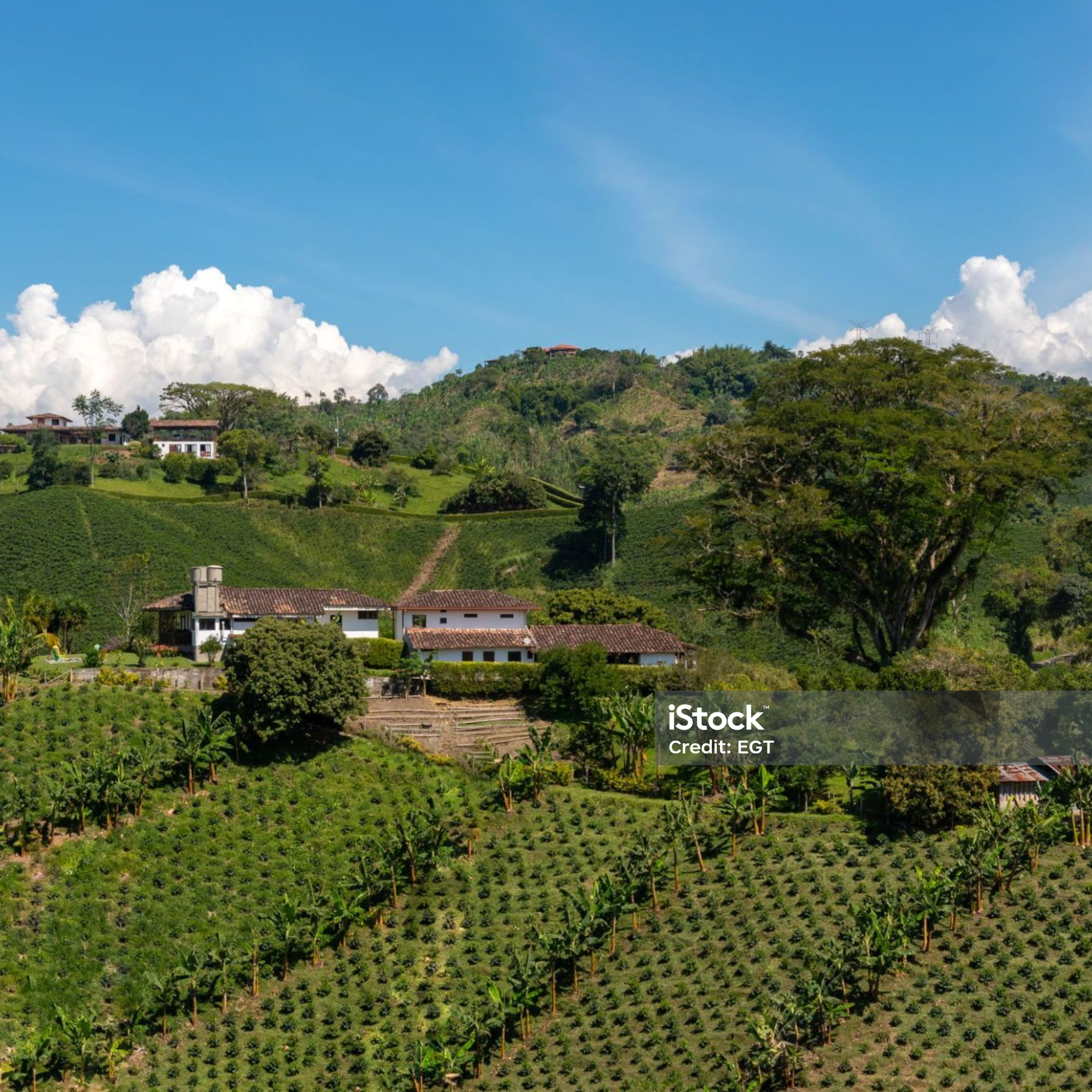
Finca El Paraíso was founded in 1998 by Don Carlos González, with the dream of building a sustainable family project.
The name “El Paraíso” reflects the natural beauty and biodiversity surrounding the farm, which we strive to preserve.
Today, the farm is managed by the new generation, made up of family members and trusted partners, who personally oversee every stage of the process, from harvesting to coffee processing.
Our philosophy is to produce specialty coffee in harmony with the environment, prioritizing quality and sustainability over quantity.
We started with only 5 hectares and, over the years, the farm has grown to 25 hectares cultivated under natural shade, with modern infrastructure for processing and drying.
The biggest challenge we faced was the coffee leaf rust outbreak in 2012, which forced us to renew part of the plantations and adopt more resilient farming practices. Thanks to these collective efforts, we not only recovered production, but also improved the quality of our coffees.
The name “El Paraíso” reflects the natural beauty and biodiversity surrounding the farm, which we strive to preserve.
Today, the farm is managed by the new generation, made up of family members and trusted partners, who personally oversee every stage of the process, from harvesting to coffee processing.
Our philosophy is to produce specialty coffee in harmony with the environment, prioritizing quality and sustainability over quantity.
We started with only 5 hectares and, over the years, the farm has grown to 25 hectares cultivated under natural shade, with modern infrastructure for processing and drying.
The biggest challenge we faced was the coffee leaf rust outbreak in 2012, which forced us to renew part of the plantations and adopt more resilient farming practices. Thanks to these collective efforts, we not only recovered production, but also improved the quality of our coffees.
Terroir
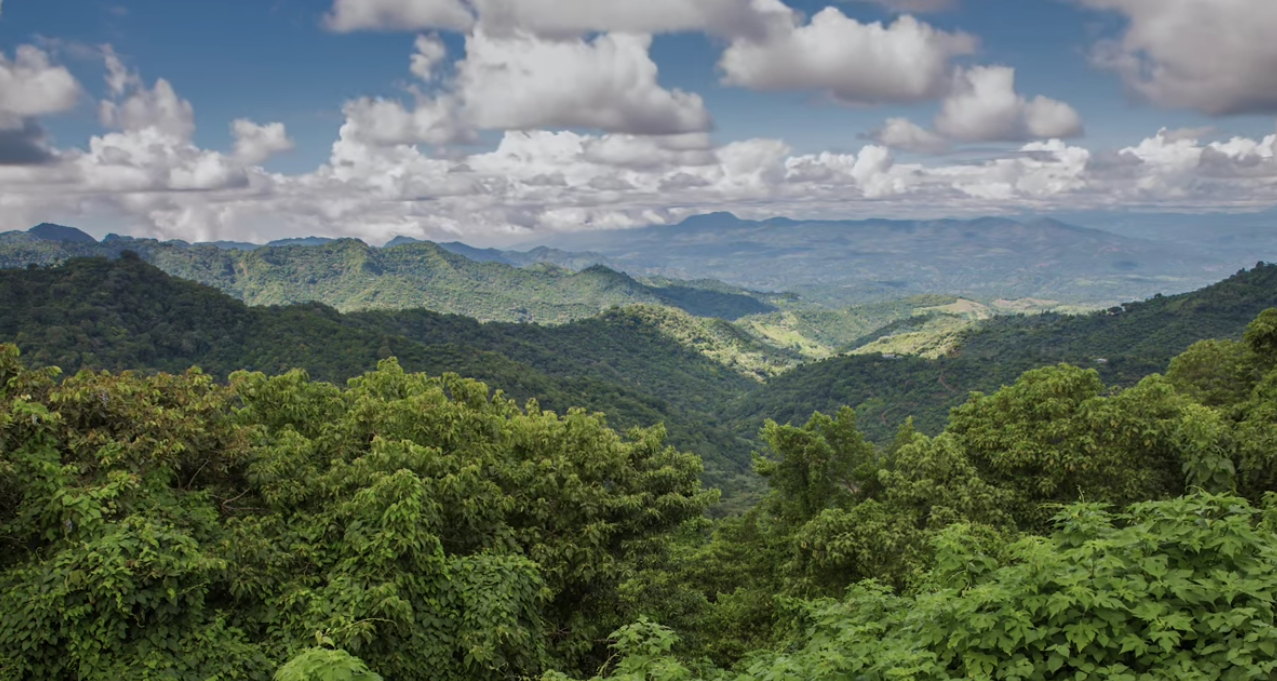
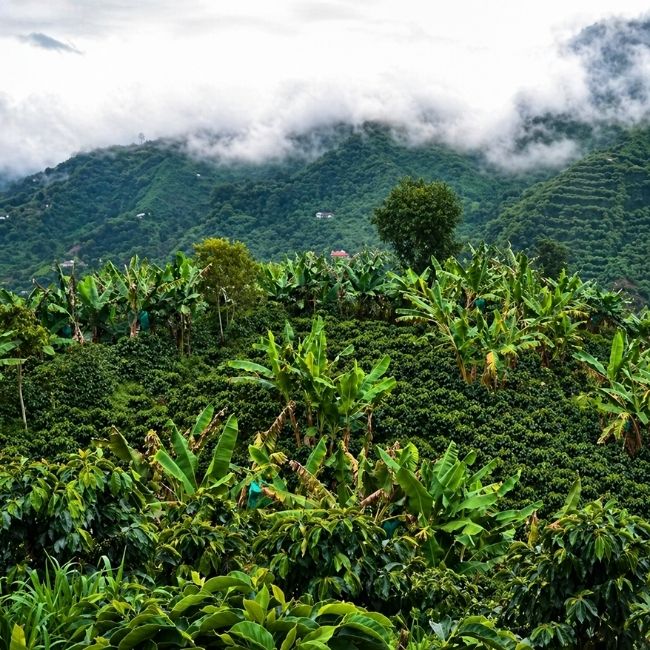
Our farm is located in Copey de Dota, in the Tarrazú region—one of Costa Rica’s most recognized areas for specialty coffee production. This mountainous environment is known for offering optimal conditions for growing high-quality coffee.
The farm sits at an altitude of 1,650 meters, which encourages slow cherry maturation, allowing for bright acidity, complex aromas, and distinctive fruity notes.
The terrain is mountainous and well sloped, ensuring excellent natural drainage, preventing water accumulation and helping to reduce disease pressure in the coffee plots.
A small stream runs through the farm, creating a cool, humid microclimate that supports healthy coffee plant development. This natural water resource enables sustainable irrigation and contributes to the ecosystem’s balance.
The farm is surrounded by shade trees such as banana plants and cedars, and it hosts a wide variety of birds, insects, and small mammals. This diverse ecosystem protects crop health, improves soil fertility, and contributes to the unique quality of our coffee.
Neighboring plantations and surrounding forests act as biological corridors that help maintain biodiversity and protect soils against erosion.
The farm sits at an altitude of 1,650 meters, which encourages slow cherry maturation, allowing for bright acidity, complex aromas, and distinctive fruity notes.
The terrain is mountainous and well sloped, ensuring excellent natural drainage, preventing water accumulation and helping to reduce disease pressure in the coffee plots.
A small stream runs through the farm, creating a cool, humid microclimate that supports healthy coffee plant development. This natural water resource enables sustainable irrigation and contributes to the ecosystem’s balance.
The farm is surrounded by shade trees such as banana plants and cedars, and it hosts a wide variety of birds, insects, and small mammals. This diverse ecosystem protects crop health, improves soil fertility, and contributes to the unique quality of our coffee.
Neighboring plantations and surrounding forests act as biological corridors that help maintain biodiversity and protect soils against erosion.
Awards and honors

Our participation in the Cup of Excellence in Guatemala
Our awards
In 2022, our Geisha variety, processed with natural anaerobic fermentation, took 1st place in the Cup of Excellence Costa Rica with a score of 90.5 points, strengthening our reputation for sensory excellence.
In 2021, our washed Caturra lot was awarded 2nd place in the National Quality Award, standing out for its clean cup and vibrant citrus notes.
In 2020, we received the Gold Medal at the International Coffee Awards for our Red Bourbon and Catuai blend, wet-processed, which impressed with its balance and silky body.
We were Cup of Excellence finalists for three consecutive years (2019, 2020, and 2021), with different varieties processed using innovative methods such as honey and extended fermentation—demonstrating our consistency and technical evolution.
In 2023, we received the Sustainability Award for our regenerative farming practices, responsible water use, and commitment to local coffee-growing communities.
In 2021, our washed Caturra lot was awarded 2nd place in the National Quality Award, standing out for its clean cup and vibrant citrus notes.
In 2020, we received the Gold Medal at the International Coffee Awards for our Red Bourbon and Catuai blend, wet-processed, which impressed with its balance and silky body.
We were Cup of Excellence finalists for three consecutive years (2019, 2020, and 2021), with different varieties processed using innovative methods such as honey and extended fermentation—demonstrating our consistency and technical evolution.
In 2023, we received the Sustainability Award for our regenerative farming practices, responsible water use, and commitment to local coffee-growing communities.
Coffee farming
Type of agriculture

Agroforestry plot with coffee trees under multiple layers of shade.
On our farm, we combine agroforestry, regenerative agriculture, and sustainable agriculture to produce quality coffee in harmony with nature.
We practice agroforestry by integrating shade trees and fruit trees among the coffee plants. This plant diversity protects the soil, stabilizes the microclimate, and enhances the coffee’s aromatic profile.
We use regenerative methods such as ground cover, crop rotation, and composting to restore soil fertility and capture carbon.
Our sustainable vision is based on responsible resource use, reducing chemical inputs, and conserving local biodiversity.
These practices allow us to care for the land, improve productivity, and ensure a more balanced future for our coffee-growing community.
We practice agroforestry by integrating shade trees and fruit trees among the coffee plants. This plant diversity protects the soil, stabilizes the microclimate, and enhances the coffee’s aromatic profile.
We use regenerative methods such as ground cover, crop rotation, and composting to restore soil fertility and capture carbon.
Our sustainable vision is based on responsible resource use, reducing chemical inputs, and conserving local biodiversity.
These practices allow us to care for the land, improve productivity, and ensure a more balanced future for our coffee-growing community.
Agricultural certifications

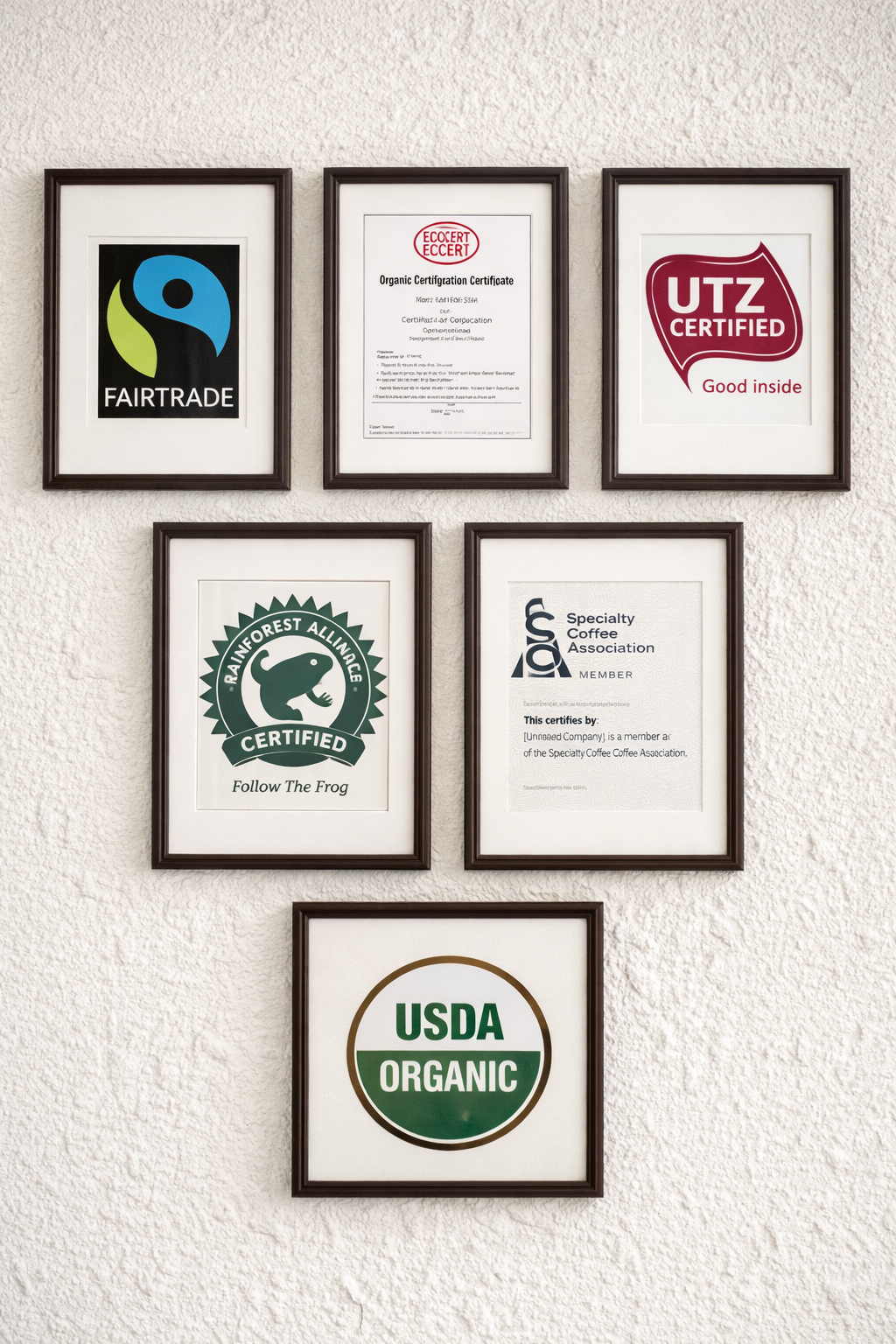
The rigor of our practices has enabled us to earn certifications that showcase the value of our agriculture.
Our farm has held organic certification granted by Control Unión since 2020.
To obtain it, we had to completely eliminate the use of synthetic chemical products and adopt natural practices such as composting, biological pest control, and the exclusive use of organic fertilizers.
This certification has transformed how we work: we continuously monitor soils, keep detailed records, and train our team in good agricultural practices.
We are currently undergoing evaluation to obtain Bird-Friendly certification, which recognizes our agroforestry efforts.
These certifications help us stand out in the market and build trust-based relationships with conscious buyers.
To obtain it, we had to completely eliminate the use of synthetic chemical products and adopt natural practices such as composting, biological pest control, and the exclusive use of organic fertilizers.
This certification has transformed how we work: we continuously monitor soils, keep detailed records, and train our team in good agricultural practices.
We are currently undergoing evaluation to obtain Bird-Friendly certification, which recognizes our agroforestry efforts.
These certifications help us stand out in the market and build trust-based relationships with conscious buyers.
Cultivated varieties

The Geisha variety requires constant care—but its exceptional cup profile is absolutely worth it.
We mainly grow Arabica coffee, with a focus on the Geisha and Yellow Bourbon varieties.
They were selected for their adaptability to our mountain microclimate, their natural resilience, and their complex sensory profile, with highly valued floral and citrus notes.
Planting density is approximately 3,500 plants per hectare, with a spacing of 2 meters between each plant.
This layout ensures good air circulation, makes manual harvesting easier, and optimizes sun exposure according to the needs of each variety.
Each varietal lot is clearly identified with colored field tags and mapped on digital charts.
Some varieties, such as Geisha, receive regulated natural shade to encourage slow, even ripening, while others like Bourbon are grown in areas with greater sun exposure to intensify sweetness.
They were selected for their adaptability to our mountain microclimate, their natural resilience, and their complex sensory profile, with highly valued floral and citrus notes.
Planting density is approximately 3,500 plants per hectare, with a spacing of 2 meters between each plant.
This layout ensures good air circulation, makes manual harvesting easier, and optimizes sun exposure according to the needs of each variety.
Each varietal lot is clearly identified with colored field tags and mapped on digital charts.
Some varieties, such as Geisha, receive regulated natural shade to encourage slow, even ripening, while others like Bourbon are grown in areas with greater sun exposure to intensify sweetness.
Origins of the varieties and nursery

We care for our nursery as if they were our own children.
Most of our plants come from specialized local nurseries, with which we have built long-term, trust-based relationships.
These partners supply us with robust seedlings — carefully selected young plants ready for transplanting, from varieties adapted to our terroir and produced under strict organic protocols.
In addition, we have developed our own on-farm nursery: a semi-shaded, east-facing structure protected by a translucent plastic roof and side mesh that promotes ventilation.
It allows us to produce our own plants from certified organic seeds, monitor development from germination, and experiment with new varieties.
The substrate used is a blend of organic compost, screened sand, and fine soil, supporting healthy germination and deep root development.
Seeds are sown by hand in cell trays or raised beds, with a spacing of 3 to 5 cm, and they are watered and shaded regularly to avoid water stress.
This plant-production autonomy enables full traceability from seed to field, while also allowing us to adjust varietal selections based on agronomic observations, season after season.
Finally, our nursery is managed by a team trained in good agricultural practices, following a strict protocol for sanitary monitoring, nutrition, and acclimation of seedlings before final transplanting.

These partners supply us with robust seedlings — carefully selected young plants ready for transplanting, from varieties adapted to our terroir and produced under strict organic protocols.
In addition, we have developed our own on-farm nursery: a semi-shaded, east-facing structure protected by a translucent plastic roof and side mesh that promotes ventilation.
It allows us to produce our own plants from certified organic seeds, monitor development from germination, and experiment with new varieties.
The substrate used is a blend of organic compost, screened sand, and fine soil, supporting healthy germination and deep root development.
Seeds are sown by hand in cell trays or raised beds, with a spacing of 3 to 5 cm, and they are watered and shaded regularly to avoid water stress.
This plant-production autonomy enables full traceability from seed to field, while also allowing us to adjust varietal selections based on agronomic observations, season after season.
Finally, our nursery is managed by a team trained in good agricultural practices, following a strict protocol for sanitary monitoring, nutrition, and acclimation of seedlings before final transplanting.
Good agricultural practices
Crop shade

A view of coffee plants grown under tree cover, with ideal natural shade—perfect for specialty coffee.
We implement a stratified shade system that supports the farm’s microclimate.
In the upper canopy, species such as Poró (30%) dominate, providing diffuse shade.
In the mid layer, we grow fruit trees such as lemon and avocado (20%), while in the lower cover we use vetiver and green-manure beans.
This combination supports biodiversity, regulates temperature, and improves moisture retention.
We carry out selective pruning every six months to maintain balanced light and facilitate field management tasks.
In the upper canopy, species such as Poró (30%) dominate, providing diffuse shade.
In the mid layer, we grow fruit trees such as lemon and avocado (20%), while in the lower cover we use vetiver and green-manure beans.
This combination supports biodiversity, regulates temperature, and improves moisture retention.
We carry out selective pruning every six months to maintain balanced light and facilitate field management tasks.
Soil management

Protecting our soils is key to the quality of our coffee. On slopes over 30°, we build stabilized terraces with living vetiver barriers every 20 meters.
We adopt practices focused on active soil conservation and regeneration.
Each year we run analyses at 15 points per hectare to assess pH, organic matter, and texture.
On slopes steeper than 30°, we build stabilized terraces with living vetiver barriers every 20 meters.
We keep the soil covered with mucuna or other species to reduce erosion and increase fertility.
These actions ensure the long-term sustainability of our coffee plots.
Each year we run analyses at 15 points per hectare to assess pH, organic matter, and texture.
On slopes steeper than 30°, we build stabilized terraces with living vetiver barriers every 20 meters.
We keep the soil covered with mucuna or other species to reduce erosion and increase fertility.
These actions ensure the long-term sustainability of our coffee plots.
Soil analysis

Annual sampling with control points across each lot—keeping the soil alive and well-nourished in every plot.
Soil monitoring is a key practice for making informed agronomic decisions.
We carry out annual sampling in January, with control points evenly distributed by lot.
If pH is below 5.2, we apply dolomite; if organic matter is below 3%, we incorporate compost.
Every two years, we assess essential micronutrients to detect potential deficiencies.
These measures allow us to adjust fertilization precisely and efficiently.
We carry out annual sampling in January, with control points evenly distributed by lot.
If pH is below 5.2, we apply dolomite; if organic matter is below 3%, we incorporate compost.
Every two years, we assess essential micronutrients to detect potential deficiencies.
These measures allow us to adjust fertilization precisely and efficiently.
Fertilization

Balanced nutrition for our coffee plants on our farm helps us improve yields while preserving cup quality.
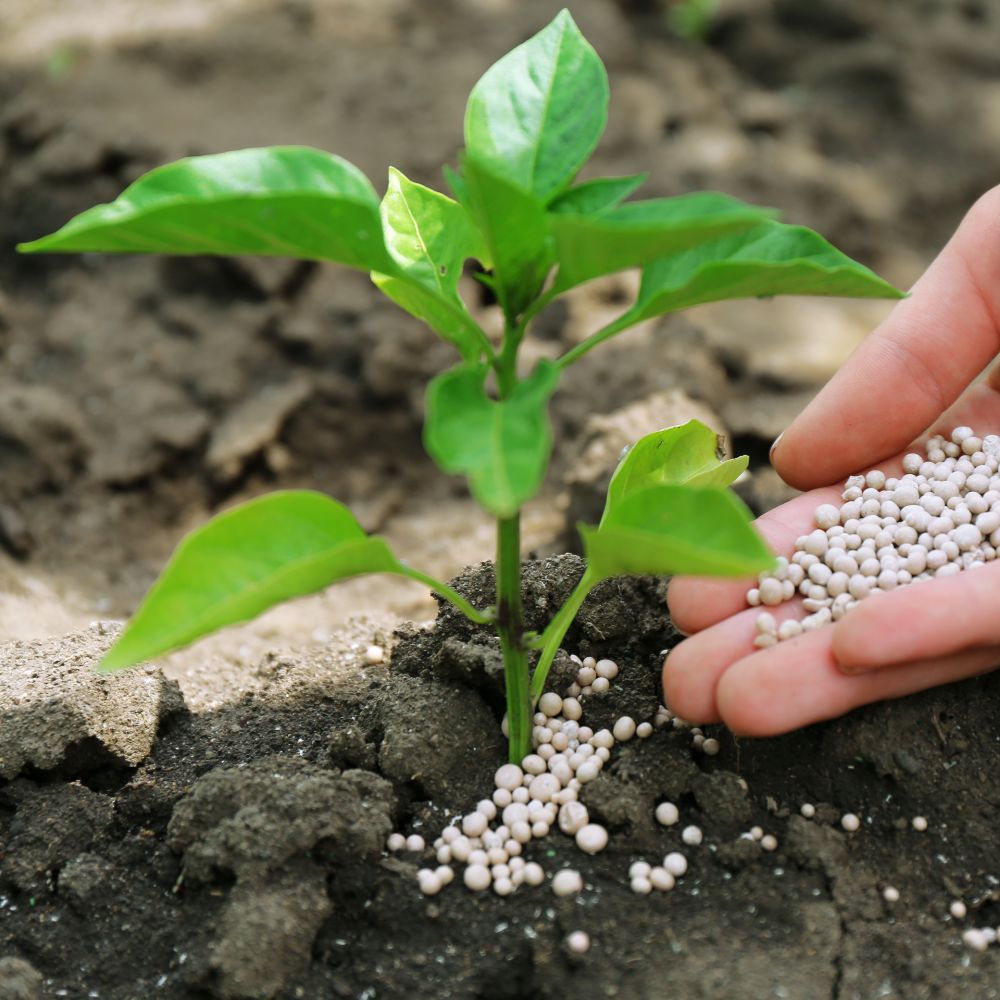
Our fertilization is 100% organic and adapted to the coffee plant’s phenological cycle.
We apply on-farm compost (2 t/ha/year) and specialized bocashi to stimulate root development.
Applications take place at three key moments: after harvest (February), before flowering (April), and during vegetative growth (September).
This strategy strengthens the plant in a balanced way and reduces nutritional stress.
No synthetic fertilizers are used at any stage of the process.
We apply on-farm compost (2 t/ha/year) and specialized bocashi to stimulate root development.
Applications take place at three key moments: after harvest (February), before flowering (April), and during vegetative growth (September).
This strategy strengthens the plant in a balanced way and reduces nutritional stress.
No synthetic fertilizers are used at any stage of the process.
Integrated pest management

Chemicals kill the soil; every day, our animals help us control pests, together with natural inputs, to keep the soil alive.
We develop a preventive and ecological approach to coffee pests.
We carry out weekly monitoring, covering 5% of the plants per lot.
We apply Beauveria bassiana every 15 days as an entomopathogenic fungus.
We use yellow traps at a rate of 1 per 100 m² and release beneficial insects such as lacewings.
Thanks to this integrated management, we have reduced chemical input use by more than 90%.
We carry out weekly monitoring, covering 5% of the plants per lot.
We apply Beauveria bassiana every 15 days as an entomopathogenic fungus.
We use yellow traps at a rate of 1 per 100 m² and release beneficial insects such as lacewings.
Thanks to this integrated management, we have reduced chemical input use by more than 90%.
Weed control

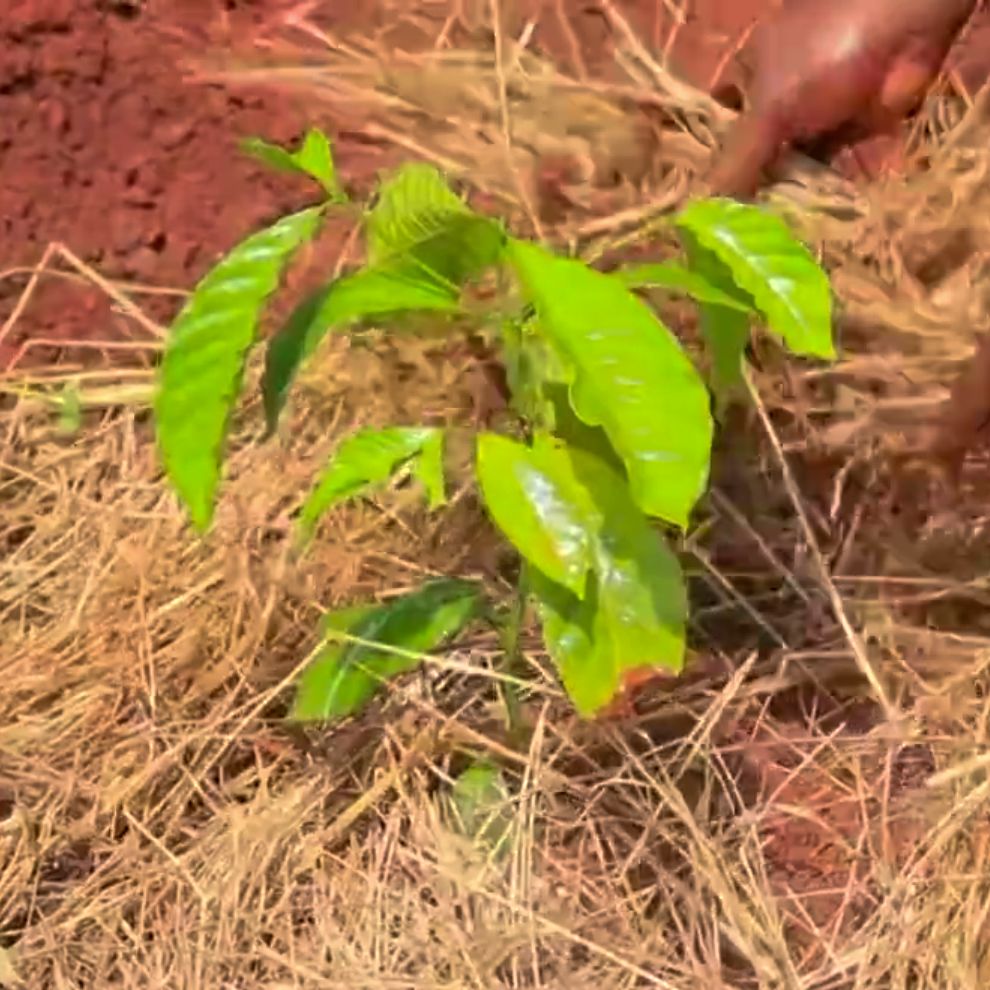
Mulching on our farm helps us retain moisture, feed the soil, and protect our coffee plants naturally.
We prioritize manual control and living ground covers to prevent erosion.
Selective weeding is carried out every two months during the rainy season.
We use natural mulch made from banana leaves and, in specific cases, apply organic herbicides such as acetic acid.
Between rows, we sow cover crops that reduce competition and improve soil structure.
These practices enable effective control without resorting to synthetic products.
Selective weeding is carried out every two months during the rainy season.
We use natural mulch made from banana leaves and, in specific cases, apply organic herbicides such as acetic acid.
Between rows, we sow cover crops that reduce competition and improve soil structure.
These practices enable effective control without resorting to synthetic products.
Pruning systems

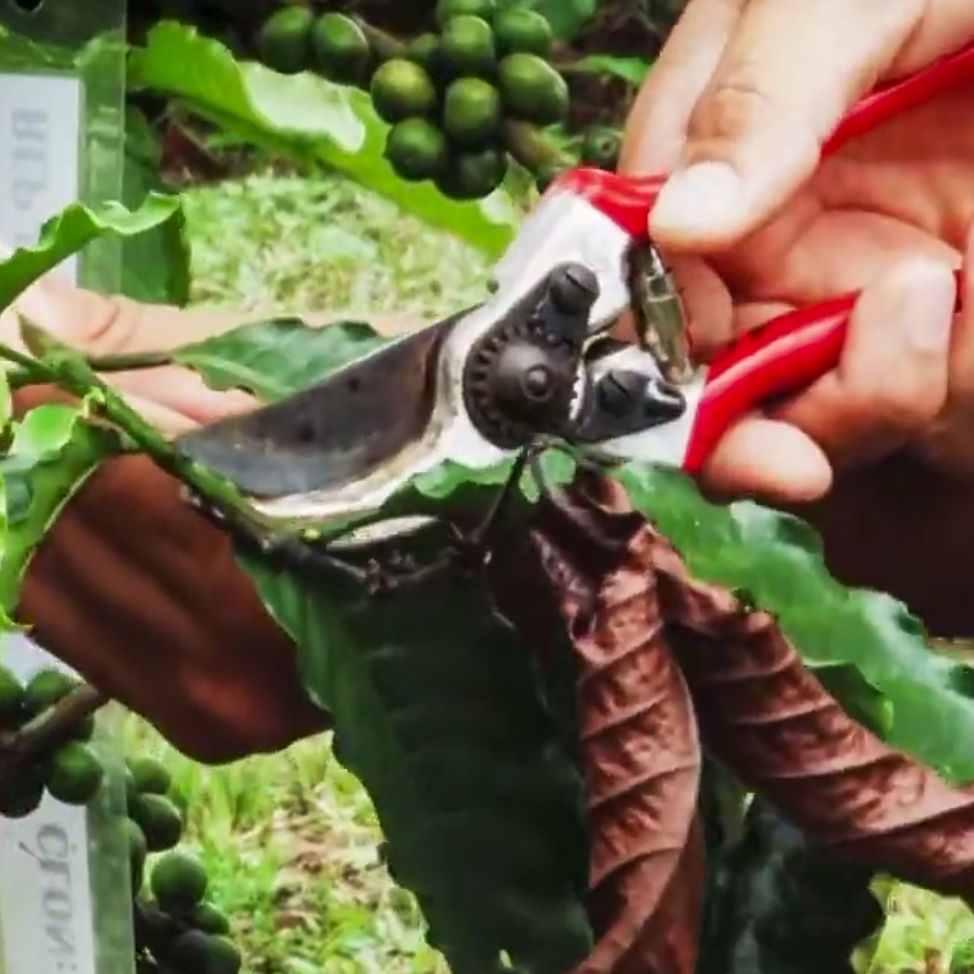
We prune our coffee trees with love and intention.
Pruning is a fundamental practice for managing the structure of coffee trees.
We carry out selective annual pruning on approximately 20% of the plants in each lot.
We alternate different types—formation pruning, recepa, and rehabilitation pruning—depending on the age and condition of the coffee tree.
We use disinfected hand tools and apply natural wound sealants such as copper sulfate.
After pruning, we reinforce nutrition with compost to stimulate vegetative recovery.
We carry out selective annual pruning on approximately 20% of the plants in each lot.
We alternate different types—formation pruning, recepa, and rehabilitation pruning—depending on the age and condition of the coffee tree.
We use disinfected hand tools and apply natural wound sealants such as copper sulfate.
After pruning, we reinforce nutrition with compost to stimulate vegetative recovery.
Coffee plantation renewal

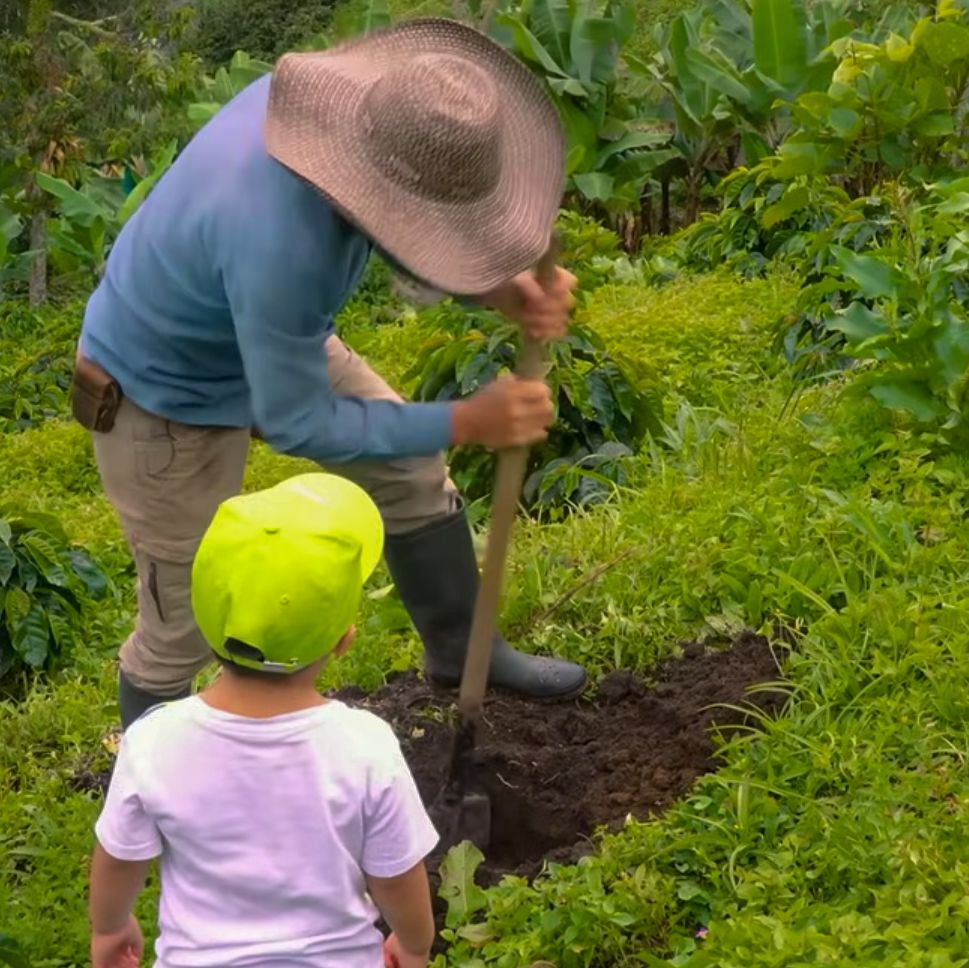
Lucas has already mapped out his future. He spends all his free time in the fields.
We follow a gradual renewal strategy to maintain productivity and genetic diversity.
We renew between 10% and 15% of plots each year, with an estimated full cycle of 20 to 25 years.
We select improved varieties such as Geisha for its rust resistance and high cup value.
Soil is prepared six months before planting, with subsoiling and organic enrichment.
This process improves crop health and ensures greater uniformity in the new plots.
We renew between 10% and 15% of plots each year, with an estimated full cycle of 20 to 25 years.
We select improved varieties such as Geisha for its rust resistance and high cup value.
Soil is prepared six months before planting, with subsoiling and organic enrichment.
This process improves crop health and ensures greater uniformity in the new plots.
Coffee harvest

Javier leaves nothing to chance: before each harvest, he walks through the plots to identify the best areas and guide the pickers where quality is at its peak.
Season and method
Coffee harvesting takes place between November and February, at the optimal point of cherry ripeness. We use a selective manual picking method, where only perfectly ripe cherries are collected—generally those with a sugar level between 22° and 24° Brix, measured with a refractometer.
Each plant is visited three times, with an interval of around 15 days between passes, respecting the natural ripening rhythm. Harvesting days run from 6:00 to 14:00, taking advantage of the cool morning conditions to preserve fruit quality and ensure workers’ well-being.
Equipment and materials
Each picker is equipped with 9 kg baskets or reinforced buckets that make transporting cherries easier. Weighing is done directly at the receiving station using fixed digital scales, enabling precise records per picker and per lot.
The tools used are simple but effective: buckets, sorting buckets, tarps, gloves, and light protective gear as needed. All equipment is checked regularly to ensure safe and efficient working conditions.

At dawn, it’s the harvest ritual: José organizes the day, equips each picker, and sets priorities plot by plot. Then everyone heads out to pick at the right pace.
Quality control
Before harvest begins, each picker receives training on selecting cherries at their optimal ripeness point, with clear instructions and visual examples.
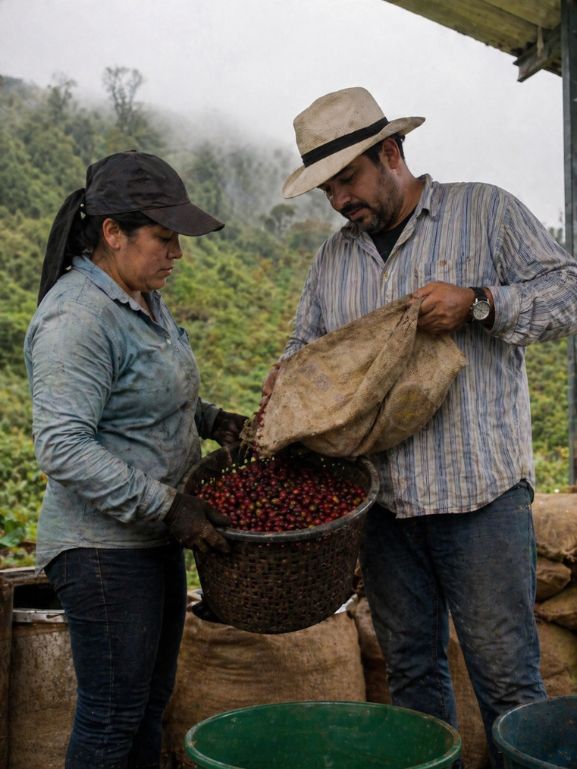
Quality control is carried out in two stages: an initial selection in the field by the pickers, followed by a second verification at the receiving station. Defective cherries are separated and weighed separately, allowing for a precise evaluation of lot quality.
To encourage honesty and reduce pressure on output, the same pay is guaranteed to all pickers, regardless of the defect level in the delivered lot.
In addition, colored wristbands are used as a visual reference in the field, helping to identify ripe cherries through a simple, easy-to-understand code.
Quality control is carried out in two stages: an initial selection in the field by the pickers, followed by a second verification at the receiving station. Defective cherries are separated and weighed separately, allowing for a precise evaluation of lot quality.
To encourage honesty and reduce pressure on output, the same pay is guaranteed to all pickers, regardless of the defect level in the delivered lot.
In addition, colored wristbands are used as a visual reference in the field, helping to identify ripe cherries through a simple, easy-to-understand code.
Transport and Reception procedures to the factory
The processing station is located about 800 meters from the main harvest plots. Cherries are collected every two hours in pick-up vehicles with open, well-ventilated beds, allowing natural airflow.
Deliveries are always made within a maximum of three hours after harvesting, which preserves cherry freshness and prevents unwanted fermentation. Ambient temperature is checked for each lot at the time of reception.
Lots are weighed individually, analyzed (Brix, defects), classified according to quality, and digitally recorded to ensure full traceability from the producer to the station.
Deliveries are always made within a maximum of three hours after harvesting, which preserves cherry freshness and prevents unwanted fermentation. Ambient temperature is checked for each lot at the time of reception.
Lots are weighed individually, analyzed (Brix, defects), classified according to quality, and digitally recorded to ensure full traceability from the producer to the station.
Coffee harvesters

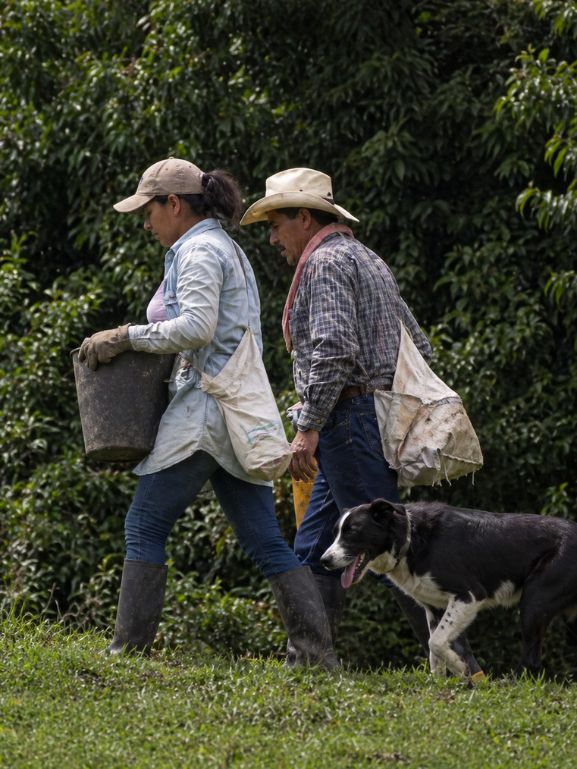
Fidelio, our loyal companion, loves to accompany the pickers. He doesn’t pick cherries, but he does collect smiles.
Harvesting team
Our team is made up of around 20 seasonal pickers, most of whom have more than five years of experience with us. This stability ensures an excellent understanding of ripeness criteria and good harvesting practices.
Two foremen supervise field work daily, ensuring instructions are followed and cherries are picked to the required quality. On average, each worker collects between 12 and 15 cajuelas per day, depending on lot maturity and weather conditions.
Working conditions
We prioritize the well-being and dignity of our pickers. We offer wages 30% above the regional average, along with full medical coverage throughout the season.
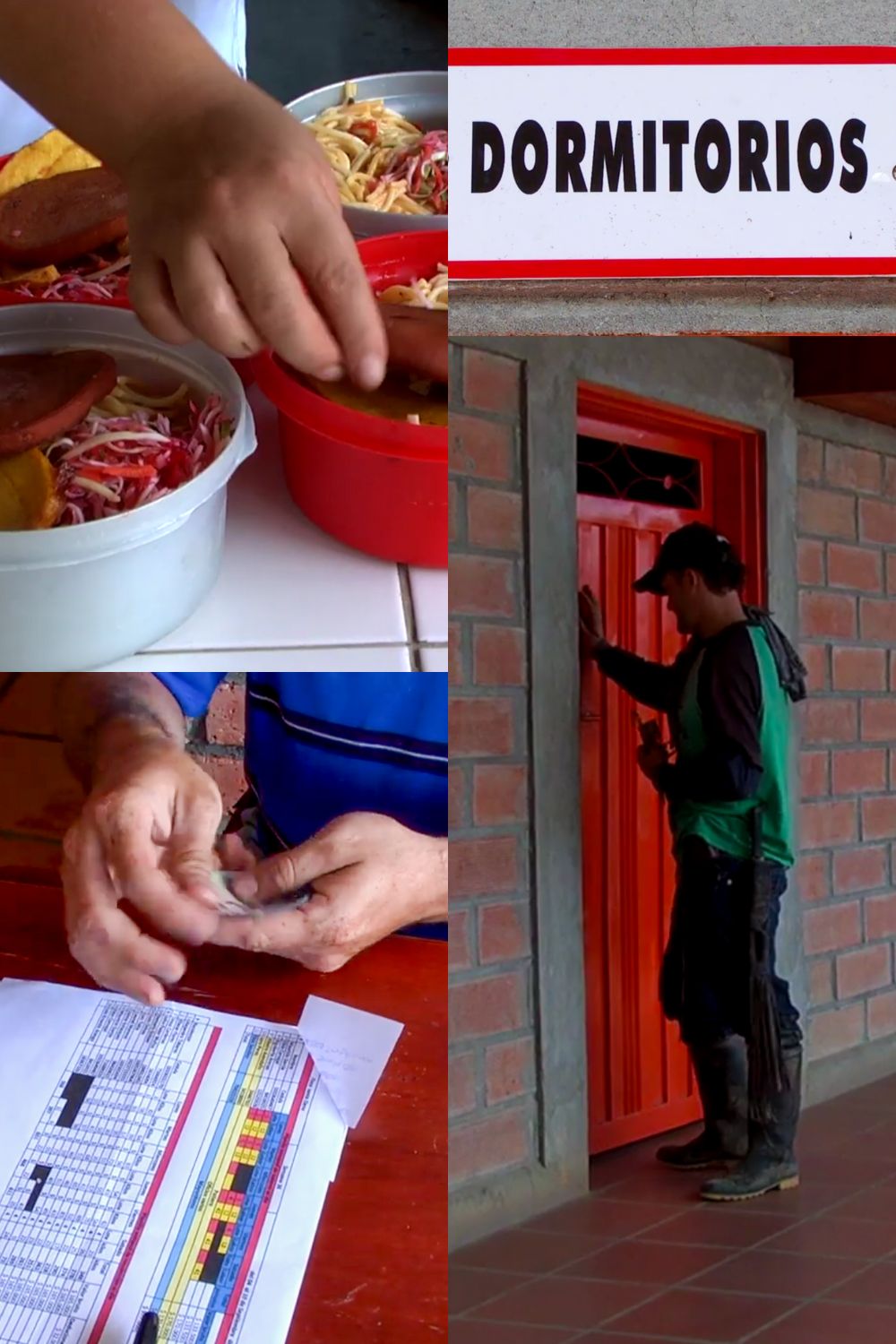
We provide clean, safe accommodation for those who come from far away, and daily transport for local residents. Meals are included and nutritious, prepared with local ingredients suited to the physical demands of the work.
Passion for coffee and our coffee-growing identity is passed on enthusiastically from generation to generation.
We provide clean, safe accommodation for those who come from far away, and daily transport for local residents. Meals are included and nutritious, prepared with local ingredients suited to the physical demands of the work.
Passion for coffee and our coffee-growing identity is passed on enthusiastically from generation to generation.

Our priority during harvest: that everyone feels comfortable and respected. Fair pay, meals, and dormitory accommodation—everything is designed to ensure good working conditions.
Family welfare
When possible, we welcome workers’ families on the farm. We have a safe children’s area, with playful activities and dedicated staff during working hours.
We offer basic school support for school-age children and organize family health and wellness workshops. This approach promotes a balanced environment between work life and family life.
Cultural activities and events
Each harvest season is also an opportunity to share and celebrate. We organize community dinners, evenings of traditional music, and contests that recognize the team’s effort.
The three best pickers of the year are recognized in a special ceremony, and additional bonuses are granted to the team based on results achieved. These activities strengthen team spirit and motivation.